


Acon is proudly Finnish!
We're headquartered in Oulu, Finland—but we ship to Canadian customers from our U.S. warehouse for faster delivery.
Distributed by our North American Distribution Partner Distribuacon Inc.
Ships from:
6035 Queens Ave NE Ste. 200
Otsego, MN 55330, USA
Mini Trampoline for Osteoporosis: Does Rebounding Strengthen Bones?
5 Mins Read

Last updated on August 14, 2026
Discover how a mini trampoline may support bone health for people with osteoporosis. Learn how gentle, low-impact rebounding may help improve balance, strength, and mobility while reducing stress on the joints.
Many Canadians ask, does rebounding strengthen bones? And more broadly, does exercise strengthen bones as we age?
Staying active plays an important role in long-term bone health. For individuals living with osteoporosis, gentle, weight-bearing activity may help support bone density over time. A mini trampoline offers a low-impact way to move regularly while placing less stress on the joints than many traditional workouts.
When done carefully and with guidance from a healthcare professional, rebounding may serve as a manageable exercise to strengthen bones, especially for older adults looking for a stable indoor option during colder months.
Why Gentle Training Matters With Osteoporosis
Osteoporosis reduces bone density and increases fracture risk, which makes exercise selection especially important. High-impact movements or forceful, uncontrolled activity may place excessive strain on vulnerable areas such as the hips and spine. For this reason, gentle and controlled movement is generally the preferred approach.
Training on a mini trampoline may provide light, repetitive weight-bearing stimulation while the springy surface absorbs much of the landing force. This cushioning effect may help reduce stress on the joints compared with exercising on concrete or hardwood floors. At the same time, rebounding engages muscles throughout the legs, core, and lower back. Stronger muscles may help support the skeletal system and contribute to better posture and stability.
Balance is another key consideration. Falls are a leading cause of fractures in older Canadians. Because rebounding challenges coordination in a controlled environment, it may help improve balance and body awareness over time. For individuals managing osteoporosis, the objective is not high jumping or intensity—it is steady, consistent movement that supports overall strength and confidence.

Safety Tips for Rebounding With Osteoporosis
Before beginning mini-trampoline training, it is important to speak with a physician or qualified healthcare provider to confirm the activity is appropriate for your individual condition. Every case of osteoporosis is different, and personalized guidance helps reduce risk.
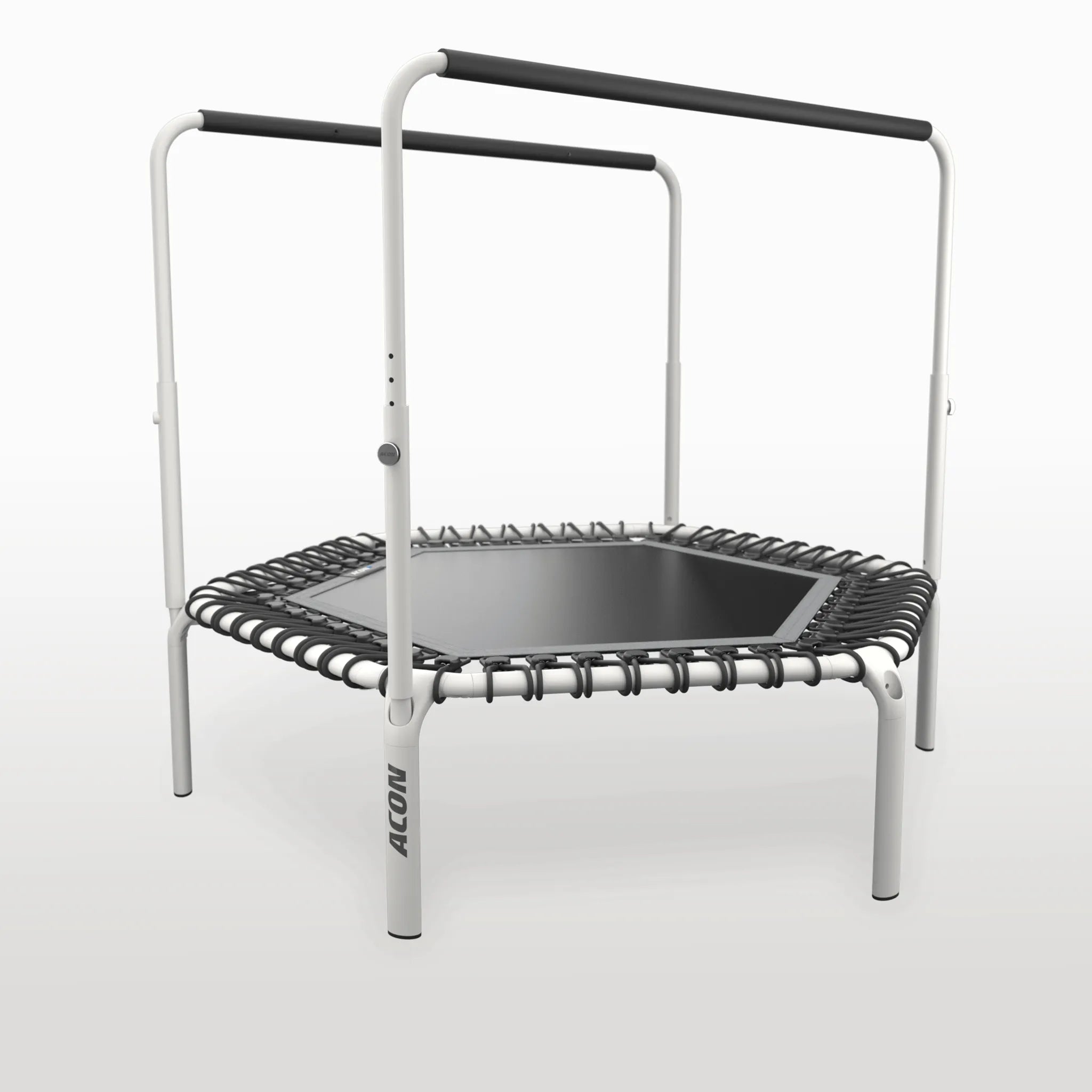
When starting out, choose a mini trampoline with a sturdy support handlebar to provide additional stability. The unit should be placed on a non-slip surface to prevent shifting, particularly on hardwood or tile floors. Wearing grip socks may also improve footing.

Movements should remain low and controlled. Gentle rocking, light bouncing without fully lifting the feet, or walking in place are often suitable starting points. High or forceful jumping is not recommended for individuals with reduced bone density. A five-minute warm-up may help prepare muscles and joints, and intensity should increase gradually over time.
Some people feel more comfortable having another person nearby during early sessions. By focusing on posture, control, and gradual progression, many individuals may find rebounding to be a manageable and joint-conscious way to stay active.
When Rebounding Might Not Be Suitable
Although rebounding may benefit some individuals, it is not appropriate for everyone with osteoporosis. Those with severe or advanced bone loss, recent fractures, or acute spinal injuries may need to avoid trampoline training. Even gentle vertical movement could place strain on vulnerable vertebrae or healing bones.
Individuals with significant balance disorders may also find the unstable surface challenging, even when using a handlebar. In these cases, exercises performed on a firm, stable surface may be safer. Ongoing or unexplained back pain, especially following vertebral compression fractures, should always be assessed by a healthcare professional before beginning new physical activity.
Because bone health varies widely from person to person, medical advice is essential. A qualified provider can help determine whether mini-trampoline exercise fits safely within your overall bone health plan.

Sample Mini-Trampoline Exercises for Osteoporosis
After receiving medical clearance, begin with simple and controlled movements.
Start with a five-minute warm-up by walking gently in place on the trampoline. Keep your posture upright and shoulders relaxed.
For the main portion of your session, try gentle rocking by standing with feet hip-width apart and creating small vertical movements without fully lifting your feet. This may help stimulate bones while maintaining control. Light bouncing can follow, keeping movements slow and steady. Focus on alignment rather than height.
Single-leg balance exercises may also be incorporated while holding a support bar. Standing on one foot for short intervals may help improve coordination and stability.
Finish with a cool-down that includes light stretching for the legs, back, and arms either on the trampoline or on a nearby stable surface.
These exercises to strengthen bones should always feel controlled and comfortable. The emphasis is on consistency, not intensity.
How to Choose a Mini Trampoline for Bone Health
Selecting the right equipment is an important part of safe training. A high-quality frame with solid construction helps ensure stability during use. The trampoline should feel secure and steady, without wobbling or shifting.
The jumping surface should provide smooth, even resistance rather than a stiff or overly bouncy response. A well-designed suspension system may allow for controlled movement while minimizing excessive force. Non-slip feet are particularly helpful in Canadian homes with hardwood or tile flooring.
For added confidence, many individuals prefer a model with an adjustable support handlebar. This feature may help improve balance and make it easier to maintain proper posture. Overall, the goal is to choose a mini trampoline that promotes safe, low-impact training in a comfortable indoor environment.
Does Rebounding Strengthen Bones?
Weight-bearing activity is widely recognized as an important factor in maintaining bone health. So, does rebounding strengthen bones? While it is not a cure for osteoporosis, consistent and carefully performed mini-trampoline exercise may help support balance, muscular strength, and overall physical function. As a form of weight-bearing exercise, it may also contribute to an overall bone health plan.
As with any new exercise program, results depend on individual health status, frequency, and proper technique. Rebounding should be viewed as one component of a broader bone health strategy that may also include nutrition, medical treatment, and other forms of movement.
Before starting, consult your healthcare provider to ensure mini-trampoline training is appropriate for you.
Frequently Asked Questions
Is it safe to use a mini trampoline if I have osteoporosis?
It may be appropriate for some individuals when performed gently and with guidance from a healthcare provider. Using a support handle may provide additional stability, and progressing gradually may help reduce the risk of injury.
How often should I train?
Many people begin with two to three sessions per week, allowing rest days in between.
Is trampoline exercise helpful for osteoarthritis as well?
Because the surface absorbs impact, rebounding may be more comfortable on the joints than hard-surface exercise. However, individuals with osteoarthritis should seek medical advice before starting.
How long should each session last?
Beginners often start with 10–15 minutes and gradually increase duration depending on comfort and recovery.
Does jumping higher improve bone density faster?
Not necessarily. With osteoporosis, controlled and moderate movement is generally safer and more appropriate than high-impact jumping.


