

Acon is proudly Finnish!
We're headquartered in Oulu, Finland—but we ship to Canadian customers from our U.S. warehouse for faster delivery.
Distributed by our North American Distribution Partner Distribuacon Inc.
Ships from:
6035 Queens Ave NE Ste. 200
Otsego, MN 55330, USA
Benefits of Gymnastics Training with Equipment: Strength and Stability for Canadian Athletes
7 Mins Read

Last updated on July 17, 2026
Gymnastics training develops strength, coordination, balance, and confidence through controlled, full-body movement. Discover how professional-grade gymnastics equipment supports skill progression, improves safety, and helps athletes create an effective home training environment.
Gymnastics offers one of the most complete forms of athletic development available to young athletes and adults alike. It builds strength, flexibility, coordination, balance, and mental discipline within a single training system. While many sports develop one or two of these qualities, gymnastics requires them all to function simultaneously. When athletes have access to properly designed gymnastics equipment, they can refine these qualities consistently and safely outside their formal training environment.
For Canadian families, home training can be particularly valuable. Long winters and extended indoor seasons mean athletes often spend significant time practicing inside. Having reliable gymnastics equipment in Canada allows skills to be reinforced year-round, without compromising safety or performance standards.
Every repetition in gymnastics reinforces motor patterns. When those repetitions happen on dependable equipment, technique becomes more precise and confidence grows. Over time, that consistency translates directly into improved performance in the gym.
Why Equipment Quality Matters for Skill Development
Gymnastics is a sport of precision. Small differences in rebound, surface firmness, or apparatus stability can affect timing and body positioning. Inconsistent equipment makes it more difficult for athletes to develop reliable movement patterns, particularly when learning aerial or dynamic skills.
For example, a well-constructed trampoline provides uniform rebound across the entire surface. This consistency helps athletes develop accurate air awareness and controlled landings. If rebound varies from one area to another, the athlete must constantly compensate, which can interfere with rhythm and increase the likelihood of awkward landings.
The same principle applies to gymnastics mats. High-density foam that maintains its shape under repeated impact protects joints and absorbs landing forces effectively. Lower-quality foam may compress permanently over time, reducing its shock-absorbing capacity. In a sport that involves frequent jumping and dismounting, dependable impact protection is essential.
Durability also plays an important role in Canadian climates. Equipment used in garages, basements, or multi-purpose indoor spaces must withstand seasonal temperature fluctuations. Strong frames, corrosion-resistant materials, and resilient covers ensure that performance characteristics remain stable throughout the year.

Essential Safety Equipment Used in Gymnastics
A safe home gymnastics environment begins with proper protective infrastructure. Before introducing advanced skills, athletes should have secure landing surfaces and adequate space.
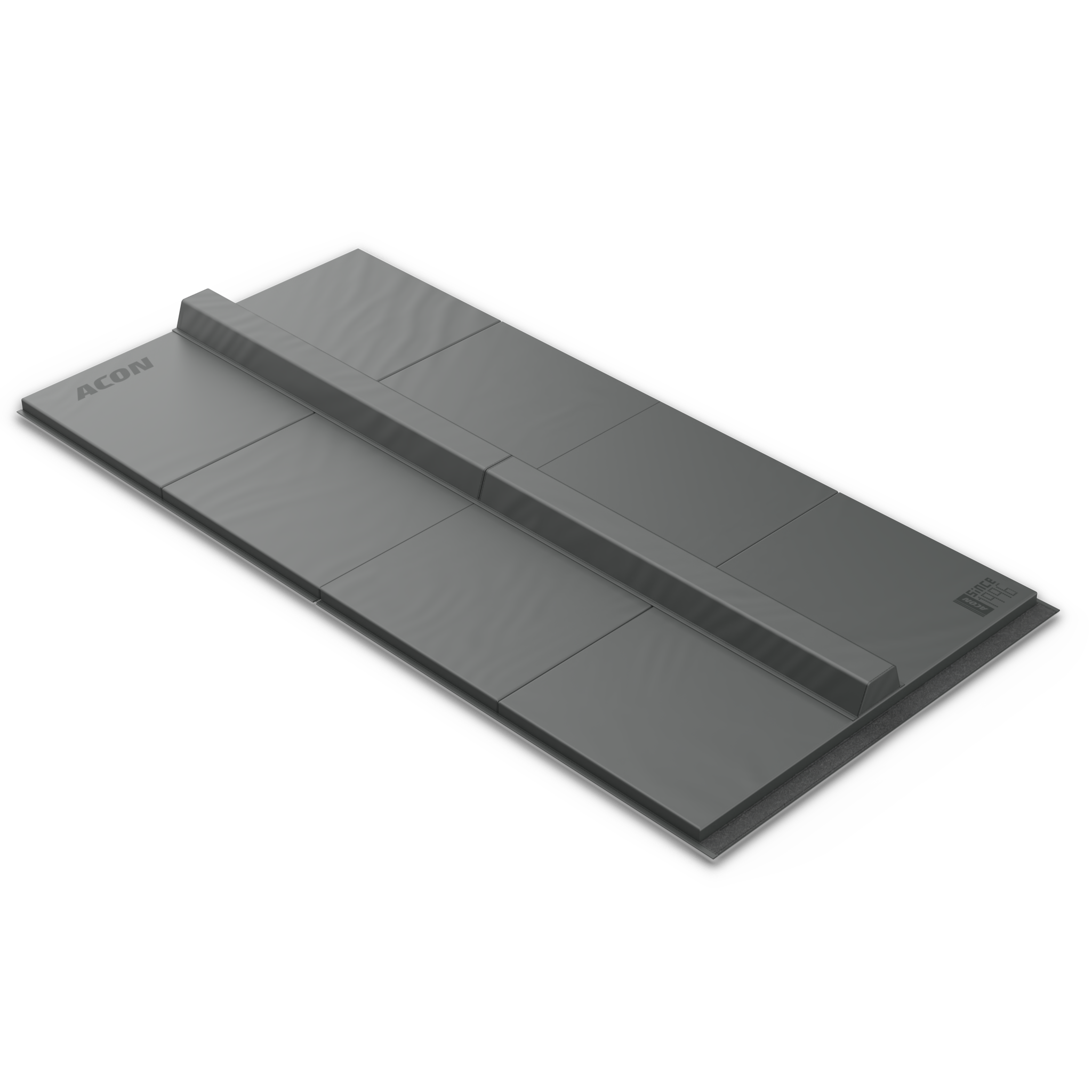
Gymnastics mats form the foundation of this setup. They should be thick enough to cushion landings without feeling unstable underfoot. Mats are used not only for tumbling but also for conditioning drills, stretching, and skill progressions. Because they are central to nearly every session, quality construction is critical.
Trampolines designed for skill development must include reinforced frames, well-tensioned springs, and comprehensive padding systems. An integrated enclosure provides an additional layer of protection, particularly for younger athletes. Stability and structural integrity are especially important when the trampoline is used regularly for structured training rather than casual recreation.
Airtracks are increasingly popular in Canadian home setups because of their versatility. By adjusting air pressure, athletes can control the firmness of the surface. Softer settings allow beginners to practice foundational skills with reduced impact, while firmer settings more closely replicate competition surfaces as skills advance. Crash mats add further protection during the learning phase of aerial elements or dismounts, reducing the stress placed on joints during repeated attempts.
Together, these pieces create a controlled environment that prioritizes both progression and injury prevention.
Gymnastics Training Compared to Traditional Strength Training
Many parents and athletes wonder how gymnastics training compares to traditional weightlifting programs. Both approaches can build strength, but they develop the body in different ways.
Traditional resistance training often isolates specific muscle groups and emphasizes controlled, linear movements. This can be highly effective for increasing muscle mass and absolute strength. However, it may not fully address coordination, joint stability, or movement efficiency across multiple planes.
Gymnastics apparatus training requires athletes to stabilize their bodies dynamically while managing momentum and balance. Whether holding a support position or executing a tumbling pass, the athlete must coordinate numerous muscle groups simultaneously. This leads to functional strength that integrates mobility and control rather than separating them.
For many Canadian athletes, a balanced approach works best. Gymnastics training builds foundational movement quality and joint resilience, while supplemental resistance work can target specific weaknesses. When combined thoughtfully, the two methods complement one another and support long-term athletic development.

Creating a Safe Home Gymnastics Setup in Canada
Designing a productive home training space begins with a clear understanding of the athlete’s goals. A young recreational gymnast may need a smaller setup focused on basic tumbling and coordination drills, while a competitive athlete may require equipment capable of supporting more advanced skills.
Space considerations are particularly important. Ceiling height must be sufficiently safe trampoline use, and there should be clear landing zones around all apparatus. Basements and garages are common training spaces in Canada, but they must be assessed carefully to ensure adequate overhead clearance and stable flooring.
Safety should always take priority over expansion. It is better to begin with high-quality mats and a single well-constructed apparatus than to crowd the space with multiple pieces of lower-quality equipment. A thoughtful layout, free from obstacles and hard edges, significantly reduces injury risk.
When choosing equipment, families should consider long-term progression. Athletes often advance quickly, and selecting apparatus designed to support higher skill levels can prevent the need for frequent upgrades. Equipment that maintains consistent performance characteristics over time helps athletes build reliable technique.
Recognizing When Equipment Needs Attention
Even durable equipment requires periodic evaluation. Mats that no longer rebound after compression, trampolines that produce uneven bounce, or frames that show signs of corrosion should be inspected promptly. Addressing wear early helps maintain both performance quality and safety.
Growth spurts are another factor to consider. As athletes increase in height and strength, equipment that was once appropriate may no longer meet their needs. Regular reassessment ensures that the training environment evolves alongside the athlete.

The Long-Term Value of Quality Gymnastics Equipment
While lower-cost recreational products may seem attractive initially, their performance often declines under consistent training use. Frequent replacement and inconsistent rebound can disrupt progress and increase long-term costs.
Professional-grade gymnastics equipment is built for durability and consistent performance. Stable construction, resilient materials, and thoughtful design support steady progression and help protect athletes during repetitive impact. For families committed to year-round training, investing in reliable equipment is both a performance decision and a safety commitment.
Canadian athletes and families can explore Acon’s full gymnastics collection here.
Gymnastics Training Insights: Common Queries
What is the appropriate age to begin training on gymnastics equipment at home?
In Canada, as elsewhere, readiness matters more than age alone. Children can begin exploring basic movements such as rolls, balance drills, and introductory tumbling around five or six years old, provided they have proper supervision and protective surfaces. At this stage, the focus should remain on coordination and confidence rather than intensive strength building.
As children mature, typically between eight and ten years old, they are often better prepared for more structured apparatus work. Improved body awareness and listening skills make it easier to follow technical guidance safely. Regardless of age, progression should be gradual. Equipment should be suited to the athlete’s size and ability, and safety mats should always be part of the setup.
Is prior flexibility necessary before starting gymnastics training?
Many parents worry that their child is “not flexible enough” to begin gymnastics training. In reality, flexibility is developed progressively through consistent practice. Athletes do not need to achieve splits or extreme ranges of motion before using equipment such as airtracks or trampolines.
What matters more is controlled movement. As athletes practice skills within safe limits, their range of motion naturally improves. This process strengthens muscles through extended ranges rather than stretching them passively without control. Over time, flexibility and stability improve together, creating more durable movement patterns.
Can gymnastics equipment training replace traditional strength training?
Gymnastics training builds significant strength, particularly in the core, shoulders, hips, and stabilizing musculature. Because movements require balance and body control, athletes develop integrated strength that transfers well to other sports.
However, traditional strength training can still offer benefits, especially for older athletes seeking targeted muscle development or rehabilitation support. Resistance training can complement gymnastics by addressing specific weaknesses or imbalances. For many Canadian athletes, especially those participating in multiple sports, combining structured gymnastics equipment training with selective strength work provides a balanced and effective approach.